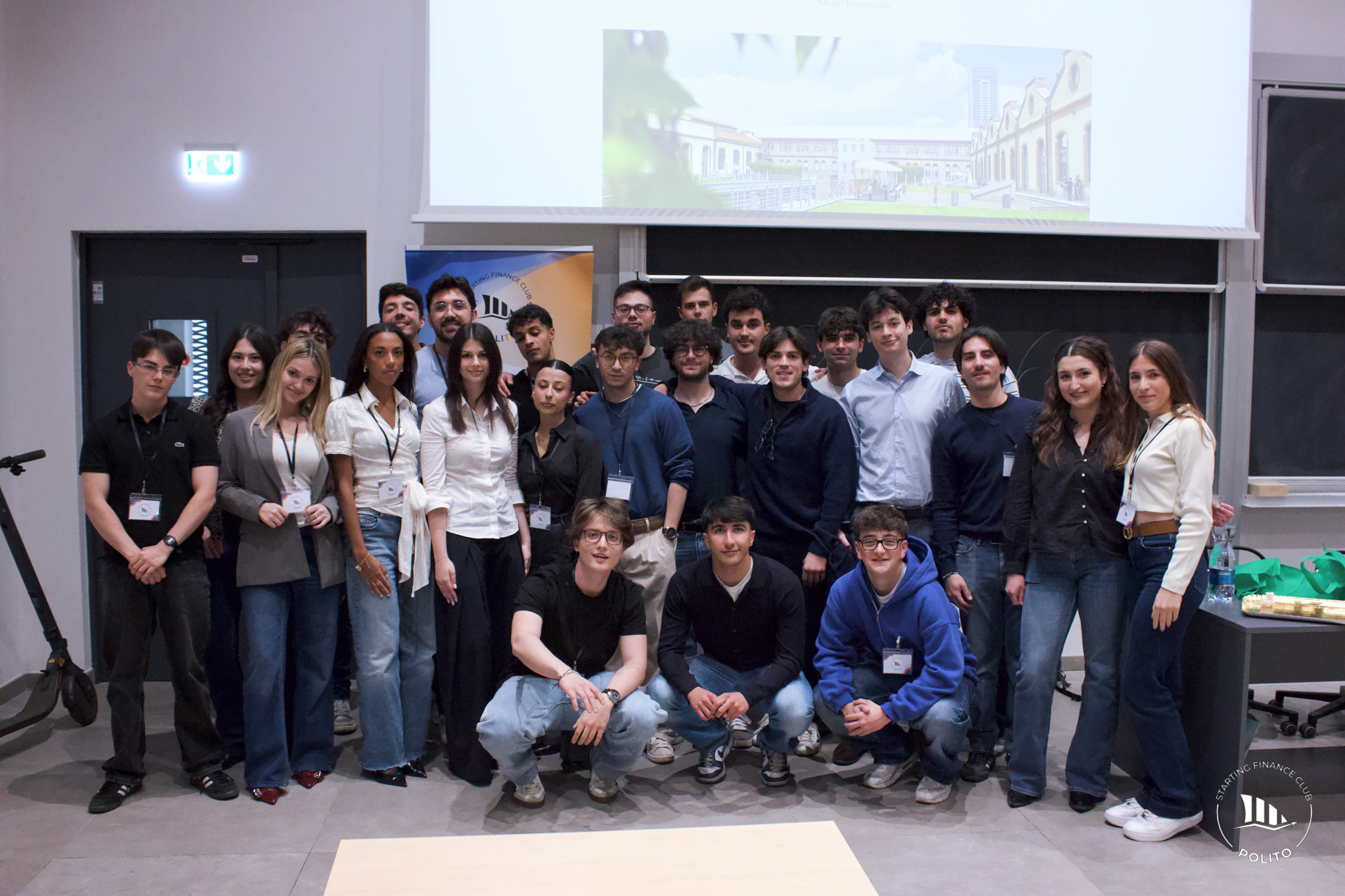
On April 22, in Room R1 at Politecnico di Torino, Starting Finance Club staged its first international event: Finance Accelerator, a simulation that translated the mathematical models of finance into a direct, hands-on execution experience.
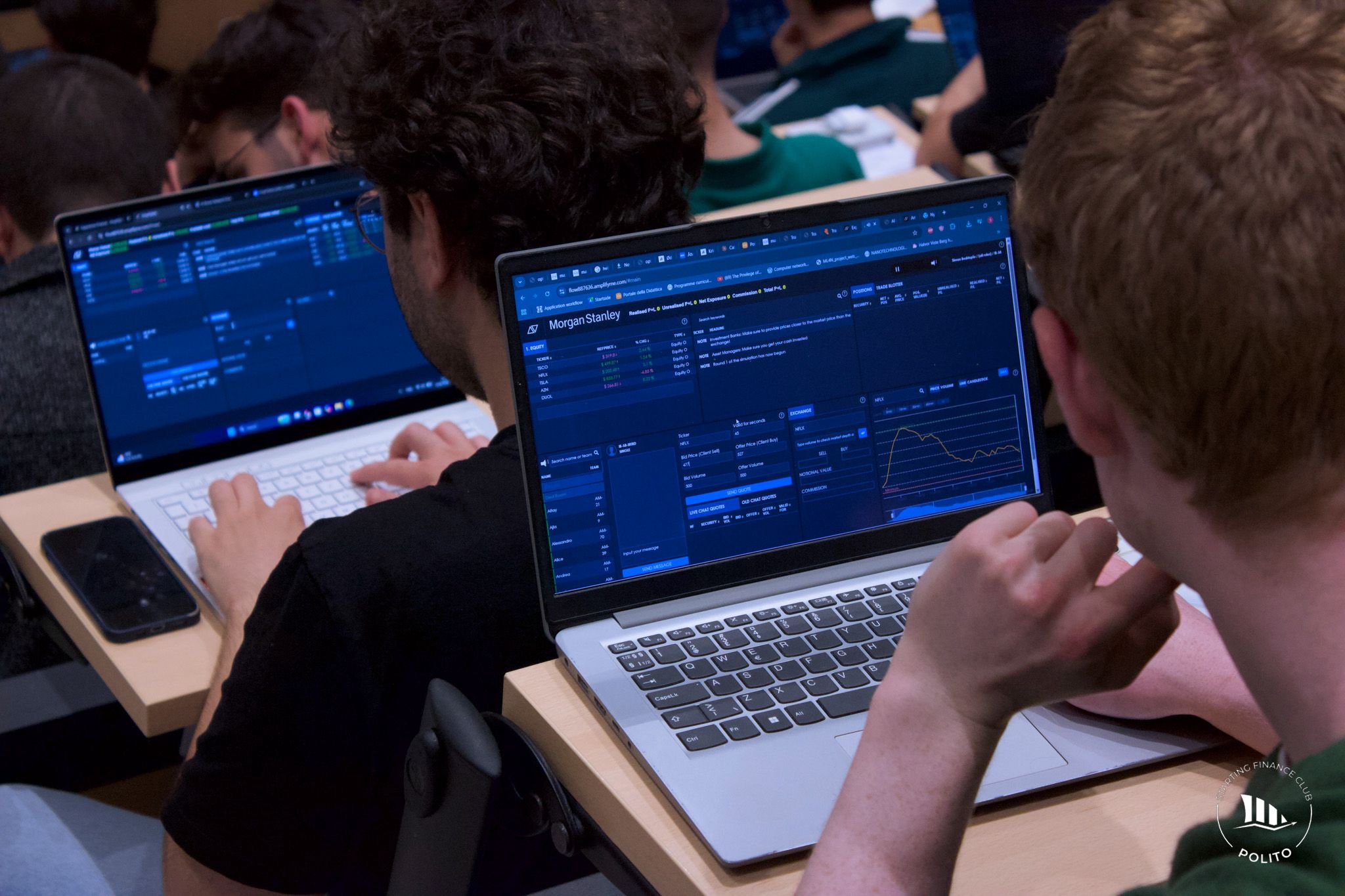
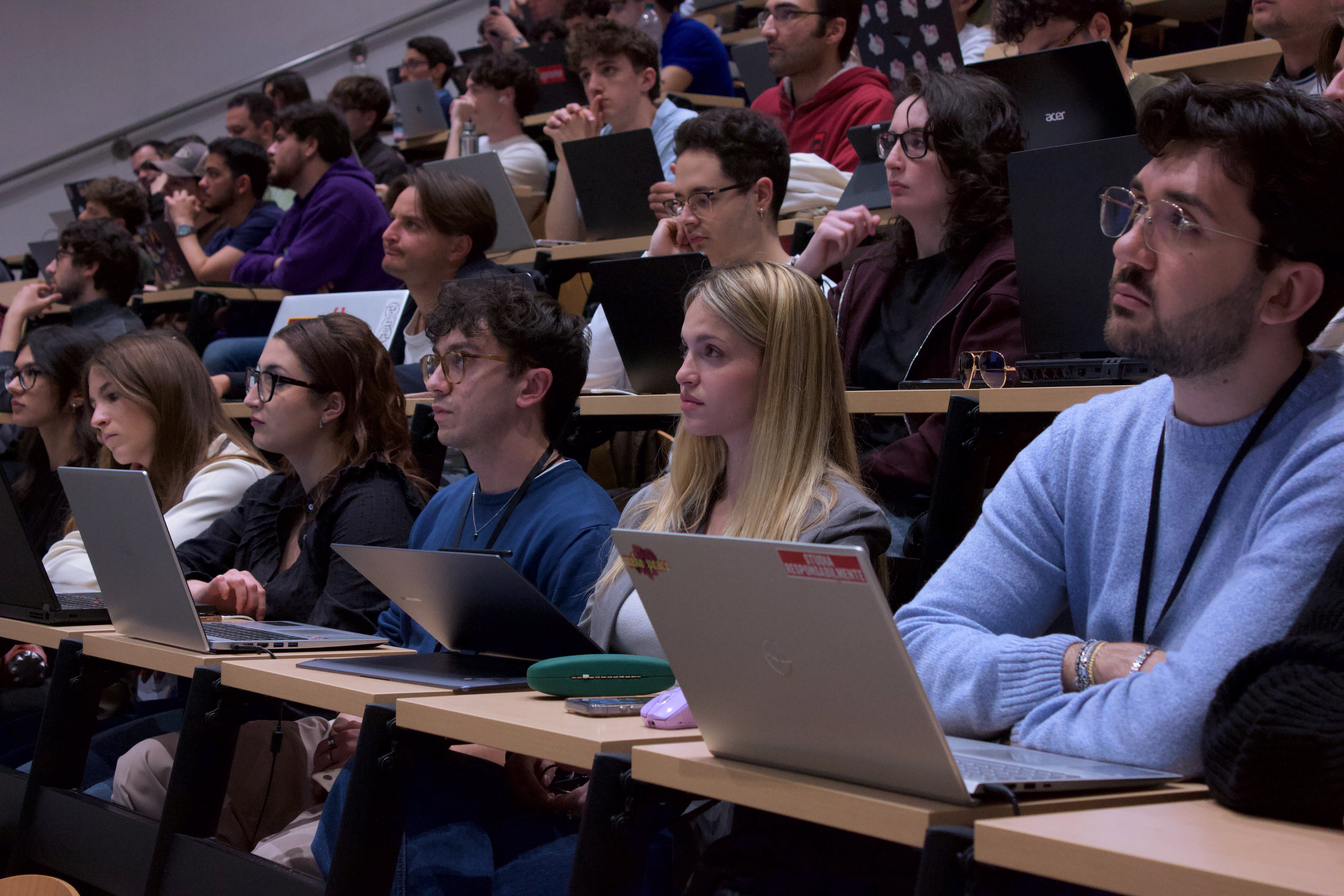
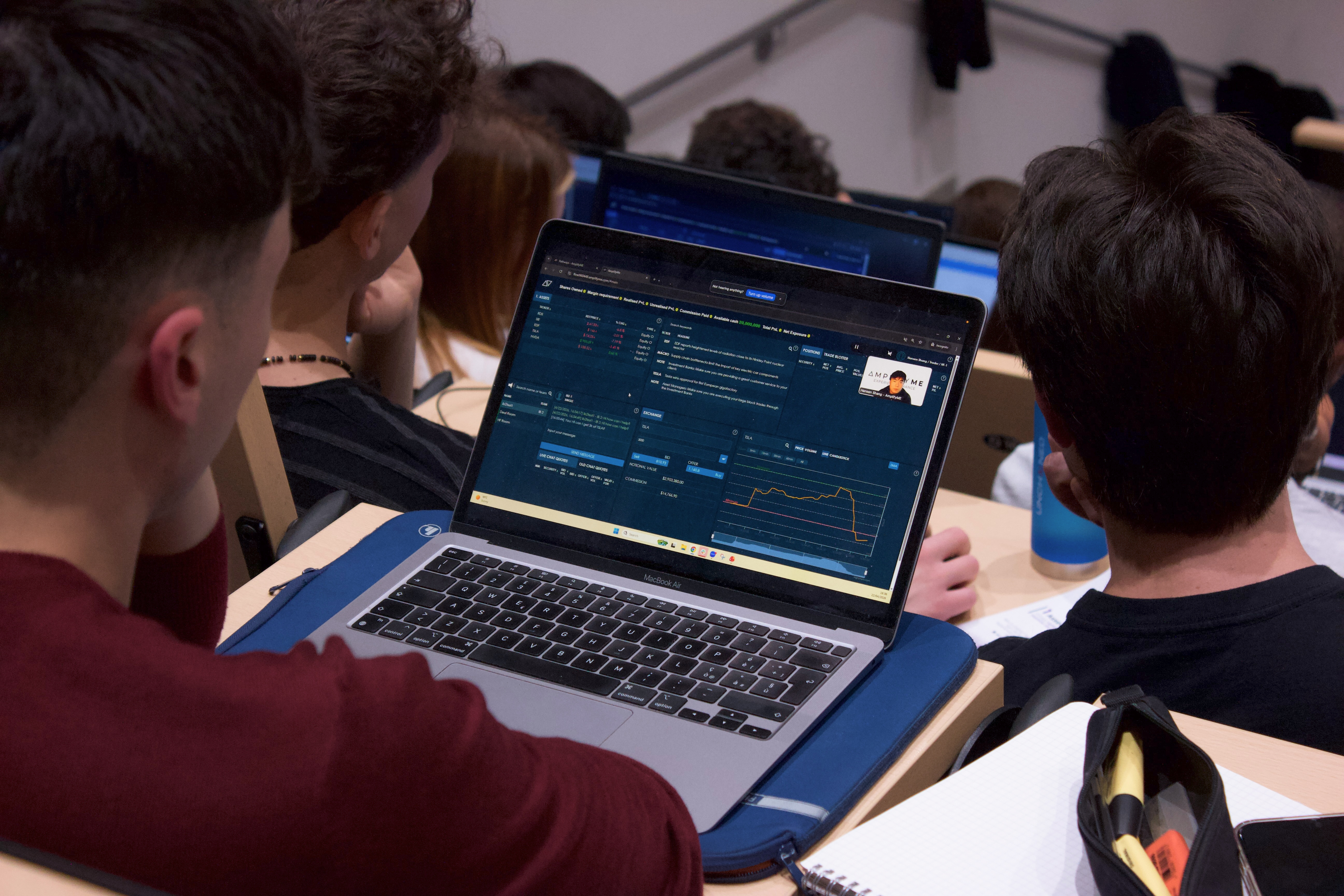
Through a terminal developed in the style of Morgan Stanley's trading platforms, more than 270 students, both in person and remotely, took part in this challenging and immersive financial exercise, guided by stock market experts connected live from London.
The atmosphere was that of a real operating lab: in a fully practical setting, we explored the delicate balance between analytical rigor and decision-making under pressure.
The Heart of Trading: Roles and Market Logic
The simulator orchestrated financial operations with great effectiveness, helping participants understand how the concept of value changes depending on the role being played. The two rounds of the session outlined the path to understanding the two sides of the market:
- Asset Manager (Buy-Side): Focused on strategic allocation and portfolio risk management. Its primary objective is to outperform the benchmark, transforming data into long-term investment strategies.
- Market Maker (Sell-Side): The engine of liquidity. Focused on market microstructure, its task is to facilitate trades while maintaining directional neutrality, managing inventory between Bid and Ask prices in a high-frequency environment.

Participants engaged with the metrics that determine success on a trading floor. Here is a summary of the key messages that emerged:
- What are the key parameters for those managing capital (Buy-Side)? Performance is not measured only by absolute ROI. Benchmark Outperformance, the ability to beat the market, and Risk Appetite are fundamental: holding too much cash is considered a failure of the investment mandate.
- How is intermediation effectiveness evaluated (Sell-Side)? In this case, volumes and generated commissions matter. Effectiveness is measured by the ability to manage complex orders, such as block trades, while minimizing market impact and maintaining precise execution, free from operational errors such as so-called "Fat Finger" mistakes.
Evaluation and Performance
At the end of the simulation, the class achieved a session rating of 80/100. In addition, each participant received a certificate of completion with a detailed analysis of their performance.
The leaderboard then allowed participants to compare their results with others and revealed the winners in the two categories of Investment Banking and Asset Management!

Excellence Is a Technical Challenge
The event confirmed a powerful truth: when engineering rigor meets the nonlinear dynamic systems of finance, the skills needed to navigate uncertainty are created. Excellence does not lie in accidental profit, but in the consistency of strategy and the precision of technique.
The market never sleeps, and our preparation continues!